China
China
University, Xiamen
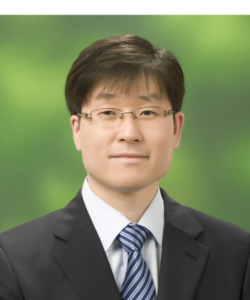
Jingrui Zhang is an Associate Professor in the Department of Instrumental & Electrical Engineering at Xiamen University, Xiamen, China. He is a doctoral-level researcher whose academic work focuses on power system optimization and dispatching, microgrid energy management, and the application of swarm intelligence and evolutionary algorithms. His research emphasizes the use of advanced computational intelligence methods—such as particle swarm optimization and genetic algorithms—to address complex, multi-objective optimization and scheduling problems in large-scale power systems and microgrids with high penetration of renewable energy and energy storage. Prof. Zhang has contributed extensively to the academic community through publications on active distribution networks and microgrid dispatching under uncertainty, and he has also served as a guest editor for special journal issues related to distributed control and optimization technologies for modern power and energy systems.
South Korea
South Korea
Gwangju Institute of Science and Technology
Bong-Joong Kim is the Dean of the School of Materials Science and Engineering at
Gwangju Institute of Science and Technology (GIST), Korea, where he has been a professor
since 2012. He previously held postdoctoral positions at Brookhaven National Laboratory’s
Center for Functional Nanomaterials (2010–2012) and Purdue University (2009–2010).
Additionally, he served as a visiting scientist at IBM T.J. Watson Research Center (2005–2012).
Dr. Kim earned his Ph.D. in Materials Engineering from Purdue University in 2008. Recognized
for his contributions to academia and research, he has received numerous accolades, including
the GIST Best Lecture Award (2023), the GIST Research Award for the highest impact factor
(2021), a commendation from Korea’s Ministry of Science and ICT (2021), and a Presidential
Award for Promotion of Science and Technology (2025). His research focuses on the design
and synthesis of organic and inorganic nanostructures and the investigation of their properties
in device formats. He aims to advance the controlled growth of nanowires, nanotubes, and
nanoparticles with precision and reproducibility, leveraging their unique properties for
applications in catalysis, electronics, optoelectronics, thermoelectrics, and sensors.
UAE
UAE
University of Sharjah
Ibrahim Kamel is a senior faculty member in the Department of Computer Engineering at the College of Computing and Informatics, University of Sharjah, United Arab Emirates, where he serves as Professor and Chair of the department. He received his Ph.D. in Computer Science from the University of Maryland, College Park, USA, in 1994, after completing his earlier degrees at the University of Alexandria, Egypt. His research interests cover a wide range of areas, including database management systems, information security, information retrieval and indexing, multimedia systems, social networks, peer-to-peer systems, mobile data management, and sensor networking. Throughout his academic career, Prof. Kamel has held several leadership roles, such as Chairman of the Department of Computer Engineering and Director of the Institute of Leadership in Higher Education, and has played a key role in establishing new academic programs. He also coordinated the Information and Network Security Research Group (INSRC), leading research projects in cloud security, database integrity, and social network analysis, and has published extensively with significant impact in both theoretical and applied computing research.

Jordan
Jordan
The Hashemite University
Mohammad F. Al-Hammouri is currently an Assistant Professor and Chairman of the Department of Computer Engineering at The Hashemite University, Jordan. He received his Ph.D. degree from the University of Ottawa, Canada, in 2021. His current research interests include distributed systems, software engineering, natural language processing, and the application of artificial intelligence in healthcare.