
Conference Dates
October 12-14, 2026
0
Days
0
Hours
0
Minutes
0
Seconds
Conference Venue
NYX Hotel Berlin Köpenick, Berlin, Germany
October 12-14, 2026
NYX Hotel Berlin Köpenick, Berlin, Germany
Welcome to the 3D Printing & Additive Manufacturing Conference, organized by Innovatex Conferences and scheduled for 12–14 October 2026 at NYX Hotel Berlin Köpenick, Berlin, Germany. Guided by the theme “Transforming Global Innovation through 3D Printing & Additive Manufacturing Technologies,” this event brings together global experts, researchers, and industry leaders to share insights and explore emerging innovations. The conference offers nearly thirty focused scientific sessions covering the latest developments in AI, ML, deep learning, automation, and data-driven technologies. Participants will engage in keynote lectures, interactive presentations, and dedicated poster sessions showcasing promising young researchers. Set in the vibrant tech hub of Berlin, the event provides an excellent platform for learning, networking, and discovering the advancements transforming the future of intelligent systems.
A concise overview of the essential instructions and standards speakers must follow to ensure a smooth, well-prepared, and professional presentation at the conference
An early outline of the planned sessions and activities, subject to final updates before the conference.
A concise document providing key information about the conference, including its theme, schedule, speakers, and participation details.
Discover the diverse scientific sessions designed to share cutting-edge research and innovations.
Committee brings together experienced professionals committed to ensuring the smooth execution.
Romania
Romania
Politehnica University of Bucharest
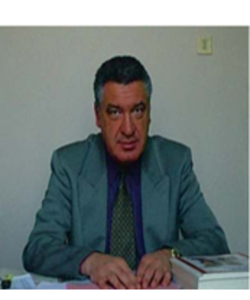
Mihai Iordache received the M.S. and Ph.D. degrees in electrical engineering from the Politehnica University of Bucharest, Romania, in 1967 and 1977, respectively. He is a Full Professor in the Electrical Department, Politehnica University of Bucharest, where he is working in the areas of circuit analysis and simulation, and in the Electrical Engineering Fundamentals. He is Doctoral Advisor at the Politehnica University of Bucharest, and the author or co-author of more than 400 journal papers and 50 books. He is also a reviewer of different Scientific Conferences in the Analysis and Simulation Circuits. His research interests include nonlinear circuits, symbolic analysis circuits, and computer-aided design of large-scale circuits, decomposition techniques for large-scale circuit analysis and simulation, topological analysis of electric circuits, wireless transfer power, and analysis and simulation of the electrical machines. He was the recipient of the 2000 Romanian Academy Award of the 2004 Romanian Engineer Association. He is IEEE (Institute of Electrical and Electronics Engineers) member, AIER (Romanian Association for the Electrical Engineers) and also ROAMSE (Romanian Association for the Advancement of Modelling and Simulation Techniques in Enterprises) member. PHD ssupervisor from 1997 (4 PHD students with grand, 6 PHD students without grand and 31 PHDs) chairman and scientific committee at the different National and International Conferences (SNET, ATEE, ICATE, OPTIM, SMACD, ECCTD, SCS, ISSCS, ELS, DAS). Reviewer at : IEEE Transaction on Analog Integrated Circuits and Signal Processing, Revue Roumaine de Science et Technologie - Électrotechnique et Énergetique, Bucarest, Annals of the Craiova university, Circuits and Systems (IEEE - CAS), International symposiums: EEA, SMACD, ATEE, OPTIM, ECCTD, SCS, ISSCS. Research grants and projects as director. Setting up (coordinating) research laboratories: Simulation and Modelling of Electric Circuits. Published papers: 40 books, 112 articles with WOS, 350 articles and 48 research projects.

Italy
Italy
University of Salento
Carola Esposito Corcione received her Ph.D. degree in Materials Science and Technology in
May 2004, from the University of Salento (Italy). From January 2005, she has been an
Assistant Professor at the University of Salento. From January 2022, she has been an associate
professor at the University of Salento. Her research interest focuses on the rheological,
thermal and transport properties of innovative polymeric materials and in particular of
polymer based nano-composites, bio-polymers, largely employed in industrial applications
(such as coatings, solar energy materials, automotive, medical, additive manufacturing,
circular economy, reuse and recycle) focusing on the relationship between processing,
structure and properties. She is the author of about 179 papers published in international
journals, 100 presentations at international conferences, and 4 patents (hindex 43).

France
France
University of Southern Brittany
Yves Grohens was the head of the Laboratory for Engineering of Materials (LIMATB now
IRDL) located at the University of South Brittany (UBS), France from 2002 to 2012. He is the
vice rector of the UBS University from 2006 to 2010 and since 2020. He is now involved in
the creation of research 3D Printing Platform (COMPOSITIC, 20 engineers) shared with
some SME on new technologies of high performances composites design and manufacturing.
He is a teacher for graduate and under-graduate students on interface sciences, adhesion and
eco-design, 3D printing of bio and nanocomposites. He published 450 papers, 4 books, 10
patents, was invited in 100 conferences and supervised 50 PhD students.
His research interests include interface science in nano and bio-composites. He is also
involved in research on confinement in model thin films and its applications. Additive
manufacturing of (bio)polymers and their blends and bio-composites. Interfaces and adhesion
of polymers with natural reinforcing agents is one of the hot topics for applications in
transportations and others. He is involved in many French and European networks focus on
these topics. He is working with most of the French and some international companies as
Arkema, PSA, Safran, Cooper Standard, Continental, CSP, Airbus, etc..
China
China
Shandong University of Technology
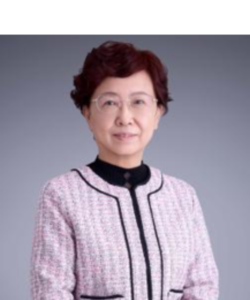
Professor Lijuan Zhang, who obtained her PhD in the University of Oxford, has dedicated nearly 30 years to material research and development, with extensive expertise in additive manufacturing technology. She had worked for the world-class institutions including Harbin Institute of Technology(HIT, China),University of Cambridge (UK), and The Welding Institute (TWI, UK). Currently Lijuan holds dual-role in two Chinese universities, i.e. as Deputy Head in the Additive Manufacturing Institute of Shandong University of Technology and as Chief Scientist in the Science & Technology Innovation Institute of Dongguan University of Technology. Her research area covers additive manufacturing technology related materials, equipment, processes and applications. She secured funding for projects including "Development of Long-Life &High-Precision Multi-Mode Electron Gun for AM" ,"Additive Manufacturing of Large Aluminum Alloy Connection Ring ", "In-Situ Metal Additive Manufacturing characterization by Neutron Diffraction and Synchrotron X-Ray", "Research and Development of Additive Manufacturing technology and Equipment for High Performance Ceramics and their Composites”, “Manufacturing and Application for Advance Ceramic Components Based on 3D Printing Technology”, etc. Her academic contributions include more than 80 publications, along with over 50 authorized and pending patents in additive manufacturing technology.
Brazil
Brazil
Federal University of Pernambuco
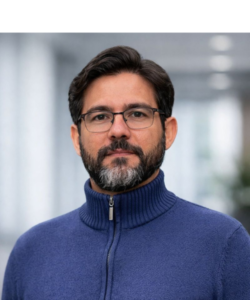
Jamilson Dantas is an Assistant Professor at the Universidade Federal de Pernambuco (UFPE), Brazil, where he earned his M.Sc. and Ph.D. degrees in Computer Science. His research interests include performance and dependability evaluation, stochastic modeling, Markov chains, Petri nets, and formal methods for the analysis and simulation of computer and communication systems. He is actively involved in applied research projects funded by national and state agencies. These include a FINEP-supported project on intelligent urban mobility and electric two-wheel vehicles, integrating IoT, cloud/edge computing, V2X connectivity, and energy-efficiency optimization, as well as a state-funded initiative under the Cientista Arretado program focused on artificial intelligence and natural language processing for automated fiscal compliance and public sector innovation. His work emphasizes real-world deployment, performance evaluation, reliability, and societal impact.
Germany
Germany
University of the Bundeswehr Munich
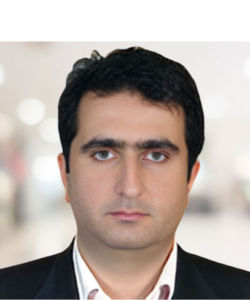
Seyed R. Saeid Rahimian Koloor is a Senior Scientist at the Universität der Bundeswehr München in Germany, where he contributes to the Institute for Structural Engineering within the Department of Civil Engineering and Environmental Sciences. He earned his Ph.D. in Mechanical Engineering with a specialization in Applied Mechanics and Design from Universiti Teknologi Malaysia (UTM), achieving distinction for his research in composite materials and structural mechanics. Dr. Koloor’s work focuses on fracture mechanics, fatigue behavior, computational and experimental mechanics, and the modeling of advanced composite materials and structures. With extensive international academic and research experience, he has served in multiple postdoctoral and scientific roles and has collaborated on multidisciplinary projects across Europe and Asia. He has authored numerous peer-reviewed publications, acted as a reviewer and guest editor for international journals, and continues to lead and participate in research initiatives in composite mechanics, finite element modeling, and structural reliability.

Portugal
Portugal
Universidade NOVA de Lisboa
Radu Godina is an Assistant Professor in the Departamento de Engenharia Mecânica e Industrial (DEMI) at the NOVA School of Science and Technology, Universidade NOVA de Lisboa, Portugal, and a researcher with the UNIDEMI – Unidade de Investigação e Desenvolvimento em Engenharia Mecânica e Industrial research unit, which is part of the Associated Laboratory of Intelligent Systems (LASI). He earned his Ph.D. in Industrial Engineering and Management from the University of Beira Interior (UBI), Covilhã, Portugal. Dr. Godina has authored and co-authored well over 180 peer-reviewed publications in international journals, books, and conference proceedings on topics including industrial symbiosis, sustainability, lean manufacturing, electric vehicles, circular economy, life cycle assessment, and quality control. He serves on the Board of Directors of UNIDEMI, coordinates the Master in Maritime Logistics program, and leads research initiatives such as projects on additive manufacturing (e.g., Smart-WAAM) and mobility for maritime logistics (M4ML). Dr. Godina is a full member of the European Operations Management Association (EurOMA) and the Industrial Engineering and Operations Management Society (IEOM), and he has recently been appointed to the editorial board of Scientific Reports (Nature portfolio) in the sustainability section. His research combines academic excellence with industrial relevance and international collaboration.
China
China
Hunan University
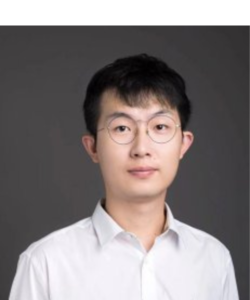
Yao Sun, PhD, MSc, BEng, DIC, FHEA, M.ASCE, is a Full Professor of Structural Engineering in the College of Civil Engineering at Hunan University in Changsha, China. His research focuses on advanced metal structures, structural fire engineering, metal additive manufacturing, and high-performance construction materials. With an international academic background that includes a PhD in Structural Engineering and recognition such as Fellowship of the Higher Education Academy and membership in ASCE, Prof. Sun has authored numerous peer-reviewed publications and contributes actively to global research through editorial work, collaborative projects, and leadership in structural engineering innovation.
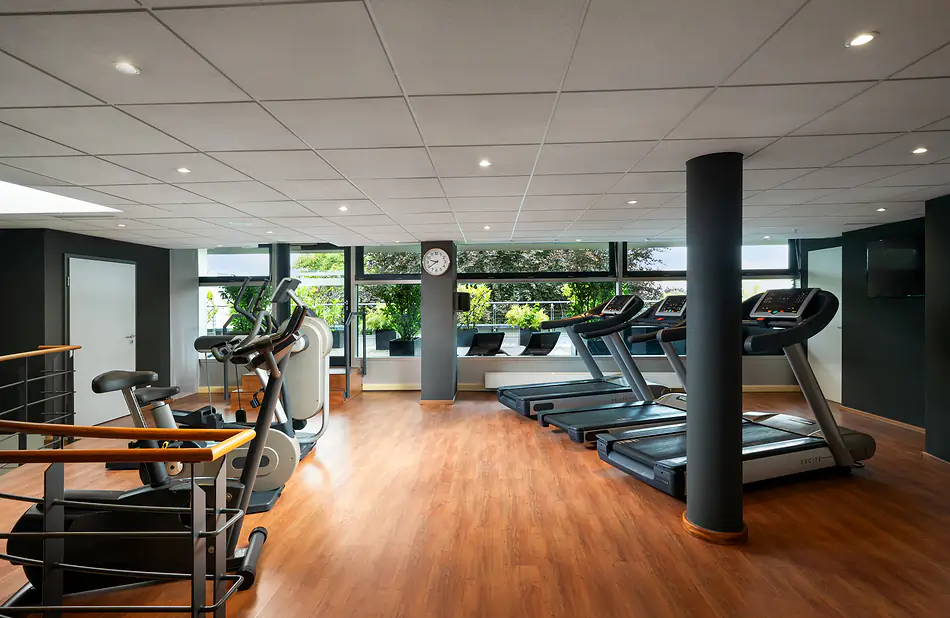
Enjoy world-class hospitality with premium services and modern amenities designed for your comfort.








Meet the distinguished speakers who will share their expertise and insights during the conference.

Romania
Romania
Politehnica University of Bucharest
Abstract Title: ESTIMATION OF PARAMETERS OF MAGNETICALLY COUPLED COILS USED IN WIRELESS POWER TRANSFER SYSTEMS
Abstract: This paper presents a procedure to identify the parameters of the wireless power transfer systems (WPTS) using the ANSYS Extractor Q3D Program. Because the WPTS operates at high frequency, between 50kHz and 30MHz It is necessary to generate the C, L, R, and G matrices for each operation frequency. For this, we use the ANSYS Extractor Q3D Program to compute the C, L, R, and G matrices, for different configurations, structures, frequencies and distances between coils. The C, G matrices that are generated by the software from the field simulator outputs are in a Maxwell matrix format. Since a standard SPICE component only has two terminals, the software derives a SPICE matrix format from the Maxwell capacitance and conductance elements. This is only necessary for the capacitance and conductance matrices, because both formats yield the same results for the inductance and resistance matrices. If, for each structure of the two magnetically coupled resonators we keep: the same relative position between the two coils, the same turn number, the same geometrical dimension of the conductors and the same conductor materials, finally, we can select the optimal solution.
India
India
National Institute of Technology
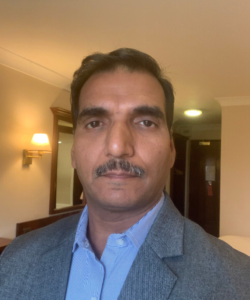
Abstract Title: Rational Design of Bioinspired Nanoplatforms for Magneto Responsive Drug Delivery,
Growth Factor Stabilization, and Oxidative Stress Mediated Tissue Regeneration
Abstract: The rational engineering of biointerface regulated nanomaterials represents a promising
strategy for advancing wound healing and bone tissue regeneration. In this study,
multifunctional biomaterial platforms were developed through molecular level surface design
to integrate structural support, controlled therapeutic delivery, redox modulation, and favorable
protein interactions. A growth factor integrated composite hydrogel demonstrated optimized
pore architecture, enhanced hydration capacity, improved hemocompatibility, reduced
cytotoxicity, and accelerated wound closure in vivo, highlighting its regenerative efficacy. In
parallel, a surface engineered magnetic core shell nanocarrier enabled magnetically responsive
and sustained drug release while preserving serum protein structural stability, thereby
supporting regulated bio-nano interactions and rapid tissue repair. Additionally, a
glycosaminoglycan functionalized mineral nanocomposite incorporating reactive surface
groups exhibited enhanced cytocompatibility and effectively mitigated oxidative stress induced
apoptosis in vivo. Collectively, these platforms establish a unified paradigm of bioinspired
nanomaterial design that synergistically integrates structural biomimicry, antioxidant
functionality, and controlled molecular interactions, underscoring their translational potential
for advanced wound management and bone regenerative therapies.
South Africa
South Africa
Tshwane University of Technology
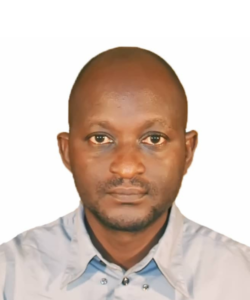
Abstract Title: Hybrid Computational–Experimental Design Frameworks for Additive Manufacturing of Acoustic Metamaterials in Architectural Applications
Abstract: Additive manufacturing (AM) has enabled unprecedented geometric freedom in the fabrication of acoustic structures for architectural environments. However, the design-to-fabrication process for AM-based acoustic components remains highly iterative, often requiring extensive trial-and-error between simulation, prototyping, and experimental validation. This study proposes a hybrid computational–experimental design framework aimed at streamlining the development of architected acoustic materials and metamaterials for building applications. The framework integrates parametric acoustic simulation, machine learning–assisted optimization, and rapid AM prototyping with targeted experimental validation to reduce design inefficiencies. By linking digital design tools with experimental feedback loops, the approach enables more accurate prediction of broadband sound absorption and diffusion performance while accounting for manufacturing constraints and material properties. The research further investigates how iterative data-driven refinement can accelerate the translation of complex acoustic geometries from simulation to large-scale fabrication. The proposed methodology has the potential to significantly shorten development cycles, improve performance reliability, and support the deployment of customized acoustic solutions in architectural spaces. Ultimately, the study contributes toward establishing more efficient workflows for integrating AM technologies into architectural acoustics design practice.

France
France
University of Southern Brittany
Abstract Title:Thermal-Defect-Driven Digital Twin for Process Optimisation in Composite LSAM Tooling
Abstract: Large-scale additive manufacturing of composite tooling offers significant potential to reduce lead times while improving supply-chain sovereignty for advanced composite manufacturing. However, fused-granulate fabrication processes generate complex thermomechanical behaviours. At this scale, classical printing defects such as over- or under-extrusion, insufficient inter-bead adhesion, and local geometric deviations are amplified and directly affect the final tool shape required for composite forming operations. This work introduces a thermal-defect-driven digital twin designed to link LSAM process physics, material behaviour, and tooling requirements. The approach is implemented on the GEMINI3D platform using an ABB robotic system equipped with an EGM controller and a Dyze extrusion system. Within a human-centred framework, the digital twin integrates multi-source data including real-time process monitoring, numerical simulation outputs, experimental measurements, and operator knowledge. This integration provides a dynamic representation of bead deposition and thermal history throughout the manufacturing process. Both open-loop and closed-loop interactions are supported, enabling real-time adjustment of LSAM process parameters through AI-based modelling. The digital twin enables defect analysis at micro-, meso-, and macro-scales, addressing gaps, inconsistent extrusion, missing deposition, stringing, drool. In parallel, thermodynamic fields are analysed to optimise layer time between substrate and bead deposition, limiting decohesion, warpage, and material collapse. Preliminary results demonstrate a platform-level deployment of GEMINI3D for LSAM monitoring, an Error Twin capable of quantifying extrusion coefficient deviations, and a Defect Twin combining 5D vision, bead geometry reconstruction, and thermal-history estimation to adjust adhesion and porosity in real time. This approach supports first-time-right manufacturing by compensating for defects during deposition. It also enables advanced modelling of adhesion, thermodynamics, and microstructural evolution, allowing prediction of residual stresses and their influence on downstream composite lay-up. The digitalisation of tooling fabrication provides a robust pathway for producing composite tools that meet stringent dimensional and performance requirements.
Early registration is now open. Take advantage of discounted rates by registering before the deadline.
137 Haldane Road, E6 3JW, London, United Kingdom
+44 1202 166866
contact@innovatexconference.com
We’re here to help. Reach out to our team for inquiries, support, or collaboration opportunities—we’ll respond promptly.