
Conference Dates
March 1-3, 2027
0
Days
0
Hours
0
Minutes
0
Seconds
Conference Venue
Berlin, Germany
March 1-3, 2027
Berlin, Germany
Welcome to the Artificial Intelligence, Machine Learning & Data Science Conference, organized by Innovatex Conferences and scheduled for March 1-3, 2027 Berlin, Germany. Guided by the theme “AI, Machine Learning & Data Science: Driving the Next Wave of Digital Transformation,” this event brings together global experts, researchers, and industry leaders to share insights and explore emerging innovations. The conference offers nearly thirty focused scientific sessions covering the latest developments in AI, ML, deep learning, automation, and data-driven technologies. Participants will engage in keynote lectures, interactive presentations, and dedicated poster sessions showcasing promising young researchers. Set in the vibrant tech hub of Berlin, the event provides an excellent platform for learning, networking, and discovering the advancements transforming the future of intelligent systems.
A concise overview of the essential instructions and standards speakers must follow to ensure a smooth, well-prepared, and professional presentation at the conference
An early outline of the planned sessions and activities, subject to final updates before the conference.
A concise document providing key information about the conference, including its theme, schedule, speakers, and participation details.
Discover the diverse scientific sessions designed to share cutting-edge research and innovations.
Committee brings together experienced professionals committed to ensuring the smooth execution.

Slovakia
Slovakia
university of zilina

Malaysia
Malaysia
Sunway University
M. A. Hannan is a Distinguished Professor of Intelligent Systems in Energy and Power Applications at Sunway University, Malaysia. He is a Coordinating Lead Author (CLA) for the UN IPCC WG III AR7 and serves as Adjunct Professor at Korea University and Visiting Professor at Universiti Tenaga Nasional. His research focuses on intelligent energy systems, renewables integration, energy storage, smart grids, energy management, and power electronics. He is a Clarivate Highly Cited Researcher (2022 & 2023) in Engineering, with over 400 publications, 25,000+ Scopus citations (H-index 74) and 33,000+ Google Scholar citations (H-index 87). He has secured AUD 8.2M in research funding and supervised numerous postgraduate researchers. Prof. Hannan actively leads national and international research collaborations and serves in editorial and professional roles within IEEE and other organizations.

USA
USA
Pittsburg State University
Ram Gupta is an Associate Vice President for Research and Support and a Professor of Chemistry at Pittsburg State University. Stanford University has recently named Gupta as being among the top 2% of research scientists worldwide. Before joining Pittsburg State University, he worked as an Assistant Research Professor at Missouri State University, Springfield, MO then as a Senior Research Scientist at North Carolina A&T State University, Greensboro, NC. Dr. Gupta’s research spans a range of subjects critical to current and future societal needs including: semiconducting materials & devices, biopolymers, flame-retardant polymers, green energy production & storage using nanostructured materials & conducting polymers, electrocatalysts, optoelectronics & photovoltaics devices, organic-inorganic heterojunctions for sensors, nanomagnetism, biocompatible nanofibers for tissue regeneration, scaffold & antibacterial applications, and bio-degradable metallic implants. Dr. Gupta has mentored 10 PhD./Postdoc scholars, 76 MS students, and 58 undergraduate/high school students. Dr. Gupta has published over 380 peer-reviewed journal articles (13,400+ citations, 63 h-index, 280 i10-index), made over 500 national/international/regional presentations, chaired/organized many sessions at national/international meetings, wrote several book chapters (120+), worked as Editor for many books (50+) for American Chemical Society, CRC, Springer, Elsevier, etc. and received several million dollars for research and educational activities from external agencies. He is also serving as Editor, Associate Editor, Guest Editor, and editorial board member for various journals.

India
India
Vishwakarma Institute of Technology
Parikshit is a senior member IEEE and is Professor, Dean Academics at Vishwakarma Institute of Technology, Pune, India. Prior to this, he worked as a Dean - Research and Development at VIT, Dean - Research and Development and Head - Department of Artificial Intelligence and Data Science at Vishwakarma Institute of Information Technology, Pune, India and Professor, Head, Department of Computer Engineering at Sinhgad Institutes. He completed his Ph. D from Aalborg University, Denmark in 2013 and completed his Post Doctoral Research at CMI, Copenhagen, Denmark. He is also Post Doctoral Fellow at university of maría Auxiliadora. He has 25 years of teaching and research experience. He is an ex-member of the Board of Studies in Computer Engineering, Ex-Chairman Information Technology, Savitribai Phule Pune University, Member – BoS and academic council member at more than 30 Universities and autonomous colleges across India. He has 117 patents, 440+ research publications (Google Scholar citations-4580 plus, H index-30 and Scopus Citations are 2400 plus with H index -23, Web of Science citations are 625 with H index - 12) and authored/edited 82 books with Springer, CRC Press, Cambridge University Press, etc. He is editor in chief for Research Journal of Computer Systems and Engineering (RJCSE), Associate Editor for IGI Global - Journal of Affective Computing and Human Interfaces (JACHI), member-Editorial Review Board for IGI Global – International Journal of Ambient Computing and Intelligence and reviewer for various transactions, journals and conferences of the repute. His research interests are Machine Learning, Data Science, Algorithms, Internet of Things, Identity Management and Security. He is guiding 8 PhD students in IoT and machine learning and EIGHT students have successfully defended their PhD under his supervision from SPPU and Three students completed Postdoc under his mentorship from NTU, Taiwan. He is also the recipient of “Best Faculty Award” by Sinhgad Institutes and Cognizant Technologies Solutions, International Level S4DS distinguished Researcher of the Year 2023 and State Level Meritorious Teacher Award and Distinguished Research Guide Award at IEEE ICTBIG 2024, organised by Symbiosis University of Applied Sciences (SUAS), Indore. He has delivered 400 plus lectures at national and international level. His book on Design and Analysis of algorithms is referred as Textbook in IIITs and NITs and his book on Data Analysis on Pandemic by CRC press has received two international awards in 2020. His edited title, ‘Data Science: Techniques and Intelligent Applications’, has been awarded the prestigious Choice Outstanding Academic Titles Award for 2024. He is also Certified ISO 27001:2022 Lead Auditor. He has also worked as an Invited Guest faculty at several international universities like UMA, Lima Peru in South America, National Taipei University Taiwan etc. He visited 24 countries till date for various academic and research collaborations.

Portugal
Portugal
Faculty of Engineering - University of Porto
João Manuel R. S. Tavares graduated in Mechanical Engineering from the Universidade do Porto, Portugal, in 1992. He also obtained his M.Sc. degree and Ph.D. degree in Electrical and Computer Engineering from the same university in 1995 and 2001, respectively, and received his Habilitation in Mechanical Engineering in 2015. He is a senior researcher at the Institute of Science and Innovation in Mechanical and Industrial Engineering (INEGI) and a Full Professor at the Department of Mechanical Engineering (DEMec) of the Faculdade de Engenharia da Universidade do Porto (FEUP). Since June 2023, he has been serving as the Head of DEMec. João Tavares has made significant contributions to his field, serving as co-editor of over 90 books and co-authoring more than 50 book chapters and 650 articles in international and national journals and conferences. He also holds 3 international and 3 national patents. His editorial roles are extensive; he is a committee member for numerous international and national journals and conferences, co-founder and co-editor of the "Lecture Notes in Computational Vision and Biomechanics" series published by Springer, founder and Editor-in-Chief of "Computer Methods in Biomechanics and Biomedical Engineering: Imaging & Visualization" published by Taylor & Francis, and Editor-in-Chief of "Computer Methods in Biomechanics and Biomedical Engineering," also published by Taylor & Francis. Furthermore, he is a co-founder and co-chair of several international conference series, including the International Symposium on Computational Modeling of Objects Presented in Images, the ECCOMAS Thematic Conference on Computational Vision and Medical Image Processing, the International Conference on Computational and Experimental Biomedical Sciences, and the International Conference on Biodental Engineering. João Tavares has also (co-)supervised numerous MSc and PhD theses and supervised several post-doctoral projects, participating in many scientific projects as both a researcher and scientific coordinator. His research focuses on computational vision, medical imaging, biomechanics, biomedical engineering, and new product development.
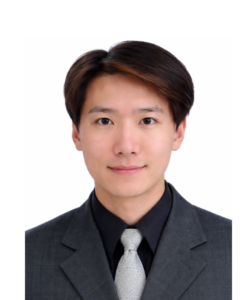
Taiwan
Taiwan
National Cheng Kung University
Mu-Yen Chen is a Distinguished Professor in the Department of Engineering Science at National Cheng Kung University (NCKU), Taiwan. Recognized in the World Top 2% Scientists (Stanford List), he is an influential researcher in AI, machine learning, soft computing, data mining, and intelligent systems. He has published over 200 scientific papers and serves as Associate Editor for Computers in Human Behavior – Artificial Humans, IEEE Access, and Applied Soft Computing, as well as Department Editor for IEEE Transactions on Engineering Management. Prof. Chen is widely known for his contributions to intelligent computing and continues to play a key role in advancing research and international collaboration.

UK
UK
Sheffield University Management School
Yichuan Wang is a Senior Lecturer/Associate Professor in Digital Marketing at Sheffield University Management School. Prior to joining SUMS, he worked for Newcastle University Business School and Auburn University (USA). He is a multi-disciplinary researcher, working mostly across marketing, information systems and healthcare. Yichuan is the author or co-author of over 100 publications, attracting in excess of 6,000 citations (Google Scholar). His research has appeared in ABS 4-indexed journals including British Journal of Management, Social Science & Medicine, International Journal of Operations & Production Management.

China
China
Shanghai Jiao Tong University
Lv Xiaojing is a tenure-track faculty member (currently Associate Professor) at the China-UK Low Carbon College, Shanghai Jiao Tong University, where she focuses on advanced energy power systems and low-carbon technologies. Her research areas include gas turbine and fuel cell hybrid systems, low-carbon combustion and energy system simulation and experiments, as well as intelligent energy systems. She completed her Ph.D. in Power Engineering and Engineering Thermophysics at Shanghai Jiao Tong University and has held postdoctoral and academic visitor positions, including at the University of Cambridge and the University of Bath in the UK. Dr. Lv has published multiple scientific articles in energy engineering and hybrid energy systems and has participated in research funded by national and regional science foundations.
Enjoy world-class hospitality with premium services and modern amenities designed for your comfort.

Meet the distinguished speakers who will share their expertise and insights during the conference.

Brazil
Brazil
São Carlos Federal University
Abstract: Estimating H I Mass Fraction in Galaxies with Bayesian Neural Networks
Neutral atomic hydrogen (H I) regulates galaxy growth and quenching, but direct 21 cm measurements remain observationally expensive and affected by selection biases. We develop Bayesian neural networks (BNNs)—a type of neural model that returns both a prediction and an associated uncertainty—to infer the H I mass, log10(MHI), from widely available optical properties (e.g., stellar mass, apparent magnitudes, and diagnostic colors) and simple structural parameters. For continuity with the photometric gas fraction (PGF) literature, we also report the gas-to-stellar-mass ratio, log10(G/S), where explicitly noted. Our dataset is a reproducible cross-match of SDSS DR12, the MPA–JHU value-added catalogs, and the 100% ALFALFA release, resulting in 31,501 galaxies after quality controls. To ensure fair evaluation, we adopt fixed train/validation/test partitions and an additional sky-holdout region to probe domain shift, i.e., how well the model extrapolates to sky regions that were not used for training. We also audit features to avoid information leakage and benchmark the BNNs against deterministic models, including a feed-forward neural network baseline and gradient-boosted trees (GBTs, a standard tree-based ensemble method in machine learning). Performance is assessed using mean absolute error (MAE), root-mean-square error (RMSE), and probabilistic diagnostics such as the negative log-likelihood (NLL, a loss that rewards models that assign high probability to the observed H I masses), reliability diagrams (plots comparing predicted probabilities to observed frequencies), and empirical 68%/95% coverage. The Bayesian models achieve point accuracy comparable to the deterministic baselines while additionally providing calibrated prediction intervals that adapt to stellar mass, surface density, and color. This enables galaxy-by-galaxy uncertainty estimation and prioritization for 21 cm follow-up that explicitly accounts for predicted uncertainties (“risk-aware” target selection). Overall, the results demonstrate that uncertainty-aware machine-learning methods offer a scalable and reproducible route to inferring galactic H I content from widely available optical data.

Canada
Canada
Concordia University
Abstract: Multi-agent Reinforcement Learning in Networking
Multi-agent systems (MAS) deal with systems where multiple agents must make decisions to
achieve their goals in a shared environment. Despite their ubiquity, their effective
implementation still faces several challenges. We will address these challenges by drawing on
recent advances in multi-agent reinforcement learning (MARL), that is, research on data
driven decision-making within MAS. We will also present some recent applications of MARL
in the context of energy-efficient resource allocation in networks.
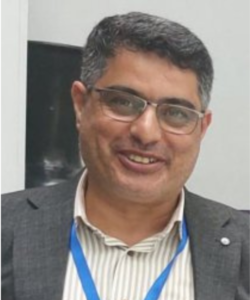
Morocco
Morocco
University Mohammed VI Polytechnic
Abstract: AI-Enhanced Digital Twins for Intelligent Manufacturing and Predictive Maintenance in Hydrogen Systems
Green hydrogen plays a central role in global decarbonization efforts, serving as a versatile energy carrier for transportation, industry, and energy storage. However, its widespread adoption is hindered by critical safety and reliability challenges, including high flamma- bility, hydrogen embrittlement, leak risks, and accelerated degradation of electrochemical components in systems such as proton exchange membrane (PEM) electrolyzers, storage tanks, pipelines, and refueling stations. This presentation introduces an integrated Digital Twin (DT) framework augmented by Artificial Intelligence (AI) to enable real-time mon- itoring, anomaly detection, predictive maintenance, and enhanced operational safety in hydrogen infrastructures. The approach combines physics-based modeling with advanced AI techniques, including machine learning, deep learning, and Physics-Informed Neural Networks (PINNs). A key focus is a laboratory-scale PEM electrolyzer (two-cell Titan EZ120 stack) mirrored through a DT architecture. The virtual replica, developed using Unity and Blender for interactive 3D visualization, synchronizes with experimental polar- ization data acquired via potentiostat under controlled temperatures (20–80 ◦C). PINNs are embedded within the DT, incorporating electrochemical constraints such as Butler- Volmer kinetics, Arrhenius temperature dependence, and ohmic resistance into a hybrid loss function. A feedforward neural network (4 hidden layers × 64 neurons, ReLU acti- vation) achieves a 12 % reduction in mean squared error compared to conventional neural networks, with RMSE values of 0.05–0.12 V and R2 > 0.98 across conditions. Real- time visualization occurs via a Grafana dashboard integrated with InfluxDB, supporting 10 Hz sampling and low end-to-end latency (150–250 ms). Broader industrial applications include predictive leak detection in refueling stations, degradation forecasting in elec- trolyzers (e.g., simulated overpotential increase of 15–20 % after 1000 cycles), structural health monitoring in pipelines and tanks, and risk assessment in underground storage using federated AI models. The framework addresses limitations such as data sparsity, model explainability, and cybersecurity through standardized DT architectures and open datasets. This work demonstrates how AI-driven DTs foster intelligent, resilient hydrogen ecosystems, accelerating safe deployment of green hydrogen technologies and contributing to sustainable energy transitions in alignment with Industry 4.0 principles.

China
China
Institute of Geography
Abstract: Cultural Landscape Gene–Driven Multimodal 3D Perception and Knowledge-Graph Analytics for Cultural Heritage Landmarks: The Heluo Digital Intelligence Platform
Driven by globalization and rapid digital transformation, heritage conservation and utilization face increasing pressures, including architectural homogenization, uncontrolled urban–rural expansion that compresses cultural space, and the isolation of heritage sites in industrialized contexts. Meanwhile, within heritage tourism, the concept and value interpretation of “cultural landmarks” remain insufficiently articulated, and many digitalization efforts follow fragmented or single-track technical routes. Taking the Heluo region—an important cradle of Chinese civilization—as a case, this paper adopts the Cultural Landscape Gene (CLG) perspective to characterize cultural landmarks along three dimensions: historical accumulation, visual-form expression, and socio-cultural identity, and to explore a sustainable conservation–tourism synergy. We develop the “Heluo Digital Intelligence” platform, underpinned by a CLG management database and GIS-based spatial analytics, and implement a closed-loop workflow of collection, classification, evaluation, reconstruction, and presentation. Multi-source 3D digitization (UAV oblique photogrammetry, terrestrial/handheld 3D scanning, and SfM/MVS reconstruction with meshing and texturing) is integrated with AI to build gene profiles and to automatically extract features from images and 3D models. In addition, NLP-based named-entity recognition and knowledge graphs enable semantic interpretation and relational analysis of cultural genes, supporting digital exhibition, virtual restoration, and cultural IP development. A representative endangered-heritage case demonstrates the feasibility of long-term digital archiving and re-creation. The results indicate that the CLG perspective can bridge value interpretation, data governance, technical implementation, and decision support, offering a replicable pathway for heritage digitalization and sustainable use in comparable regions.
Early registration is now open. Take advantage of discounted rates by registering before the deadline.
137 Haldane Road, E6 3JW, London, United Kingdom
+44 1202 166866
contact@innovatexconference.com
We’re here to help. Reach out to our team for inquiries, support, or collaboration opportunities—we’ll respond promptly.